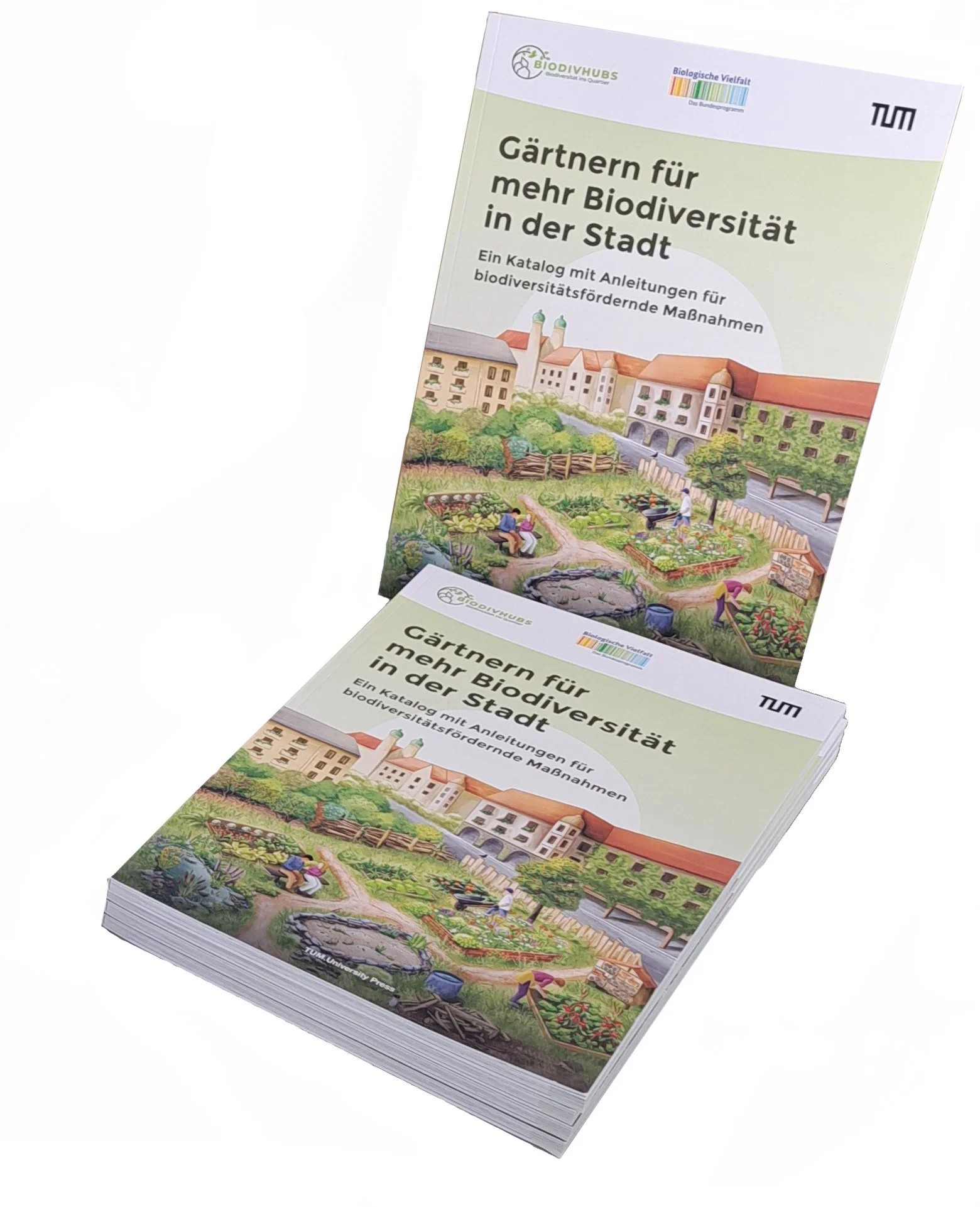
BiodivHubs – Biodiversity in Urban Gardens
Client: Technical University of Munich (TUM), BiodivHubs Project
Overview: BiodivHubs – Biodiversity in Urban Gardens is a collaborative initiative bringing together researchers and practitioners from community gardens in Munich and Berlin to promote biodiversity-friendly gardening practices. The project resulted in a catalogue of science-based and practice-oriented recommendations designed to support gardeners as active stewards of urban biodiversity.
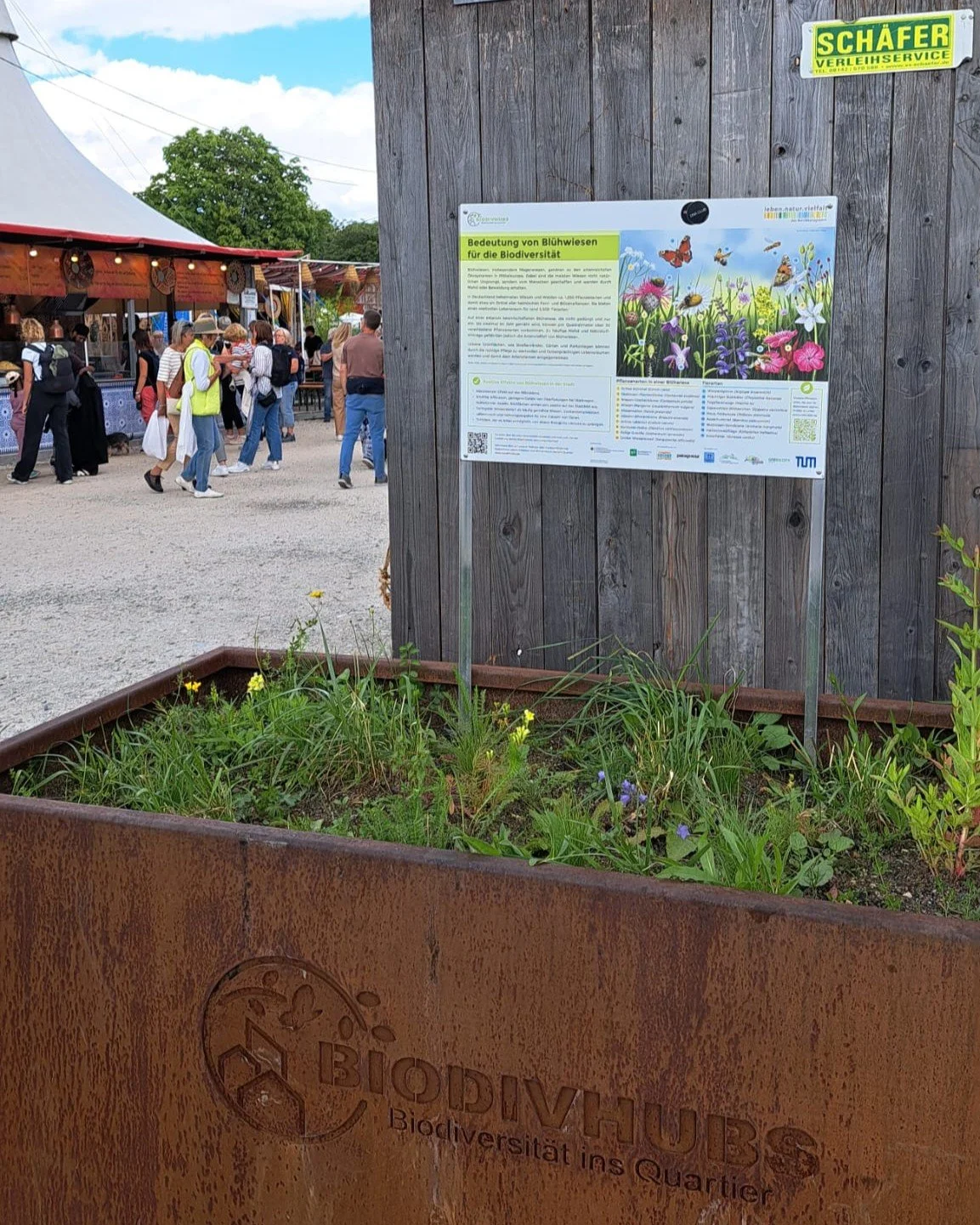
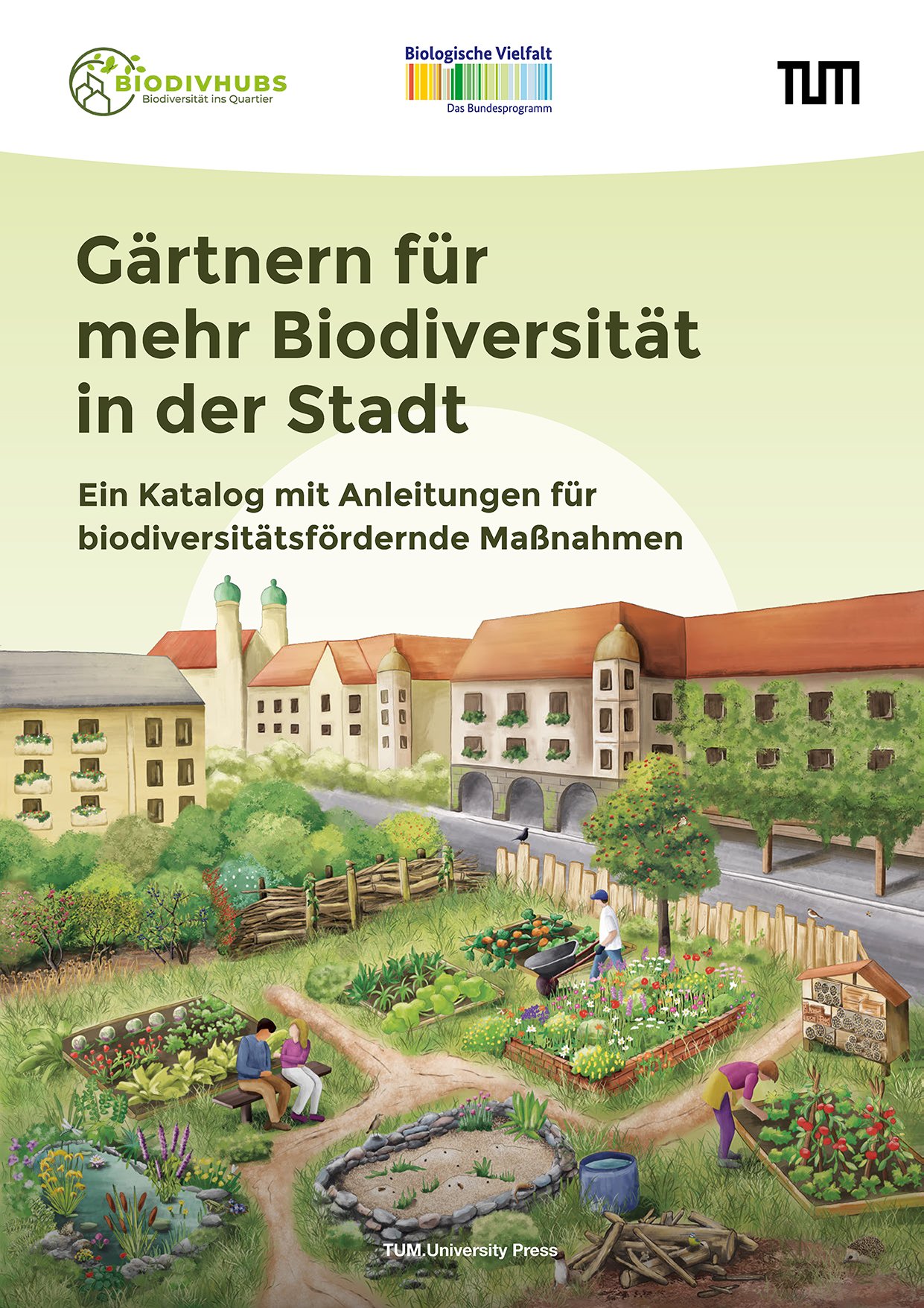
My Role: I was responsible for the visual design of the catalogue, including the development of the illustrations and the overall editorial layout. The illustrations were also adapted for use in signage and other communication materials associated with the project.
Wildbienen Nisthilfe (Wild bee nesting aid)
Challenge: The catalogue presented a wide range of biodiversity-promoting measures, each involving different habitats, plant species, animal species and ecological interactions. A key challenge was to translate these scientific and practical recommendations into clear visual representations that could be easily understood by diverse audiences while remaining ecologically accurate.
Approach: For each measure, I developed illustrations that combined detailed species representations with ecological interactions and habitat features relevant to the specific gardening practice. The visual system was designed to help readers quickly understand how individual actions can support biodiversity in urban environments and strengthen connections between plants, pollinators and other wildlife
Sandarium und Steinstruktur (Sandarium and stone structure)
Naturnaher Teich (Natural Pond)
Benjeshecke und Totholz (Benjes hedge and deadwood)
Fassadenbegrünung (Green Facade)
Vielfaltshecke (Variety hedge)
Blühwiese (Flowering meadow)
Outcome: The final illustrations became a central component of the catalogue and were subsequently applied across additional communication materials, including signage. Together, they support the project's goal of making biodiversity knowledge more accessible and actionable for urban gardeners and local communities.